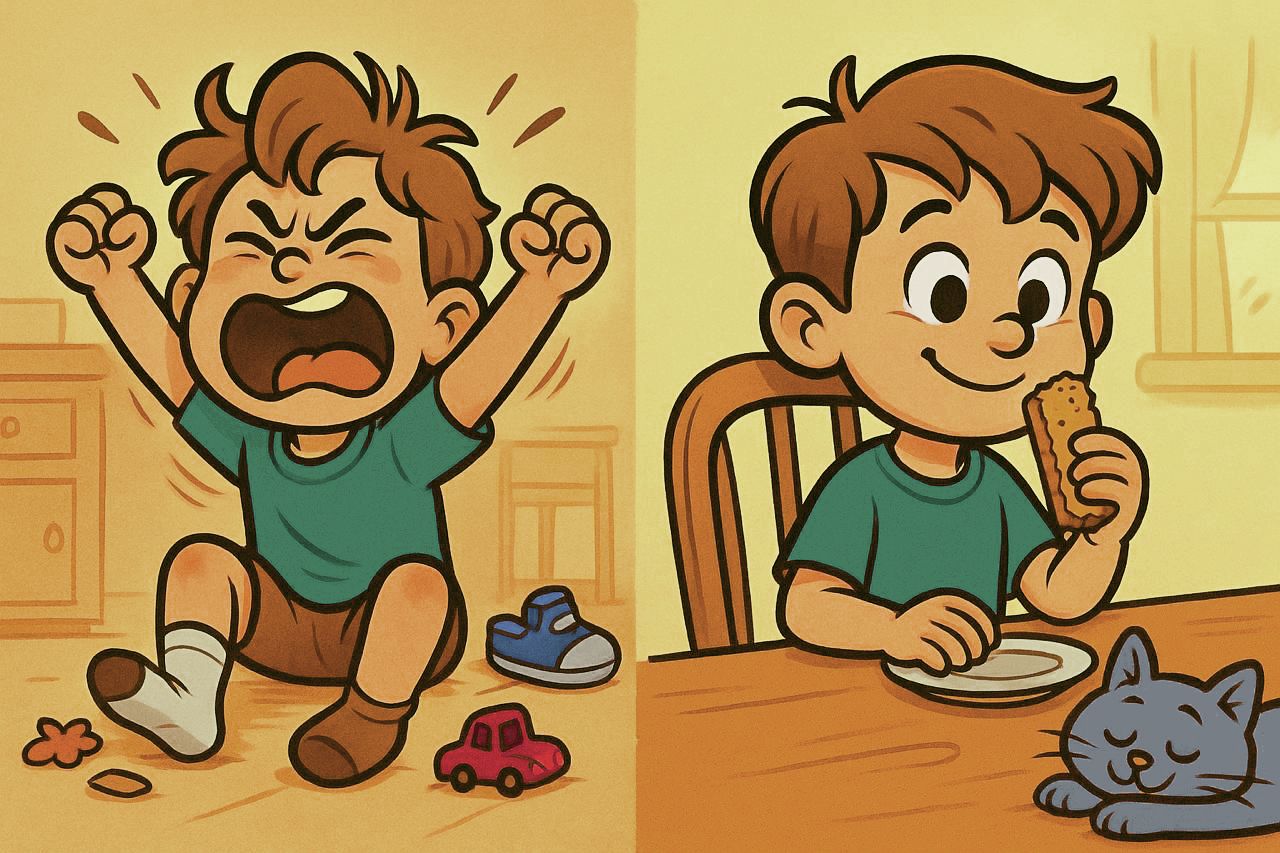
This morning, my 5-year-old lost his shit because I asked him to put on his shoes. Just five minutes earlier, he had been happily chilling on the rug, racing toy cars across the floor. Now he was stomping his feet like I’d just ruined his whole day.
By mid-morning, he was cool again, telling me jokes and laughing. The difference? He had just polished off a granola bar and a handful of gummies. An hour later: another crash. Another meltdown. It’s such a predictable cycle now that I can practically set my watch by it. And still, whenever I suggest that what he’s eating might have something to do with how he’s feeling, I get a firm, “That’s not true!”
Maybe you’ve seen this too. Your child says they’re “not hungry” at breakfast, then raids the pantry like a tornado at 3 p.m. only to be cranky, distracted, or even defiant by dinnertime. Maybe you’ve started wondering: how much of this is really food?
Junk In, Jitters Out
A 2019 study in the journal Appetite looked at eating habits in children ages 6–12 and found a strong connection between irregular meals, high-sugar diets, and emotional meltdowns. Kids who skipped meals and leaned on refined carbs or processed snacks were more likely to experience irritability, fatigue, and trouble managing frustration.
Dr. Nicole Beurkens, a clinical psychologist and nutritionist, explains:
“Many kids are running on empty or running on junk. And when blood sugar drops, the part of the brain responsible for self-regulation, the prefrontal cortex, basically powers down. That’s when tantrums, aggression, and irrational reactions show up.”
For 5-year-olds, hunger doesn’t always register clearly. It shows up as boredom, crankiness, or even silliness gone sideways. And in a world where snacks are easy, meals are rushed, and marketing appeals directly to kids’ cravings, not their biology, most children don’t realize how different it feels to be well-fed versus well-fueled.
The Myth of the “Moody Kid”
Culturally, we tend to shrug off tantrums as just part of being five. But what if at least some of that volatility isn’t just personality, it’s physiology?
Parenting author Katie Hurley points out:
“When we see kids as ‘difficult’ rather than dysregulated, we miss the opportunity to support their well-being at the root.”
And while 5-year-olds might not grasp the connection between sugary snacks and losing it over Legos, they can start to notice patterns. The hard part is helping them tune in without turning every mealtime into a battle.
Why It’s Worth Interrupting the Cycle
A cranky 5-year-old doesn’t just disrupt their own rhythm, it ripples out to the whole family. Siblings clash. Parents lose patience. Evenings feel heavier.
Food, in many cultures, is more than just fuel, its rhythm. It marks time, creates connection, and regulates emotions. When that rhythm is missing, families lose their anchor. Predictable meals and nourishing foods don’t just stabilize blood sugar—they stabilize the home.
What If the Goal Isn’t Perfection, but Pattern?
Maybe it’s not about cutting out every cookie. Maybe it’s about rhythm. Creating predictability. Helping kids notice how they feel after eating different foods.
Maybe it’s about pointing out: “Remember how calm you were after lunch today? Could that be because you ate more than just crackers?”
And maybe it’s about shifting the focus from restriction to discovery—guiding kids to notice that food can change how they feel, and giving them tools to make the connection themselves.
What about you? Have you seen food-linked meltdowns with your kids? Do they push back when you suggest snacks affect mood? What gentle strategies have worked in your home?
Because somewhere between granola bars and grocery-store tantrums, there’s a better rhythm waiting to be found.